To secure your VA loan, you’ll need to gather seven important documents. Start with your recent bank statements from the last two months and your DD-214 Form to verify military service. Don’t forget your pay stubs from the last 30 days and W-2s from the past two years. If applicable, include your Disability Award Letter, proof of identity, and any divorce or bankruptcy documents. Keep these handy, and you’ll be well-prepared for the application process! There’s more you might find useful.
Recent Bank Statements Last Two Months
When applying for a VA loan, you’ll need to gather your recent bank statements from the last two months. These statements are vital for evaluating your financial health and showing lenders your ability to afford a mortgage. Make sure to include all accounts—checking, savings, and investments. Lenders require transparency, so provide statements that show all transactions, including deposits and withdrawals. Remember, include every page of the statements, even if some are blank, to avoid discrepancies. Having these documents ready not only demonstrates your financial stability but also helps expedite the loan application process. Being prepared can make a significant difference in securing your home, so don’t overlook this essential step.
DD-214 Form
The DD-214 Form is an essential document for veterans seeking a VA loan, as it verifies your military service. Issued upon your separation from active duty, this form is important for obtaining your Certificate of Eligibility (COE). Here are three key points about the DD-214 Form:
The DD-214 Form is crucial for veterans applying for VA loans, confirming military service for eligibility.
- Eligibility Verification: You’ll need the DD-214 to confirm your service and qualify for VA loan benefits.
- Surviving Spouses: If you’re a surviving spouse of a veteran, you may also need this form to expedite your loan application.
- Alternative Documentation: National Guard and Reserve members without a DD-214 can use the NGB Form 22 to verify their service.
Keep your DD-214 safe—it’s essential for various benefits beyond just VA loans.
Pay Stubs Last 30 Days

Pay stubs from the last 30 days play a critical role in your VA loan application process. Lenders need these documents to verify your current income and employment status, which helps them assess your ability to meet monthly mortgage payments. Make certain each pay stub details your gross income, deductions, and net pay, as this provides a clear picture of your financial situation. If you have multiple jobs, include pay stubs from all sources to guarantee a thorough income assessment. Consistent income reported over time can strengthen your application and enhance your credibility with lenders. By gathering these documents, you’re setting yourself up for a smoother approval process and a better chance at securing your new home.
Disability Award Letter (if applicable)
A Disability Award Letter is an essential document for Veterans applying for a VA loan, as it verifies eligibility for tax-free disability compensation due to service-related injuries. Having this letter ready can greatly strengthen your loan application. Here’s what to confirm is included:
- Percentage of Disability Rating: This affects your funding fee exemption eligibility, so it’s important to have it clearly stated.
- Proof of Benefits: It serves as proof of the tax-free benefits you receive, which lenders consider when evaluating your financial situation.
- Submission with Income Documentation: Include this letter alongside other income documents to give lenders a complete view of your financial health.
W2’s Last Two Years

When applying for a VA loan, you’ll need W-2 statements from the last two years to verify your employment and income history. These documents provide lenders with a clear record of your earnings, showcasing income stability and consistency, which are essential for loan approval. Make sure you gather W-2s from both your current and any previous employers, ensuring you have a complete set for thorough verification. If there are gaps in your employment history, be prepared to explain them, as they may raise concerns for lenders. Along with your W-2s, you’ll likely need to submit recent pay stubs to confirm your current income levels, reinforcing your financial reliability.
Proof of Identity
To guarantee a smooth VA loan application process, providing proof of identity is essential. This documentation helps lenders verify who you are and prevents fraud. Make sure you have the following forms of identification ready:
- Government-issued ID: This can be your driver’s license, state-issued ID, or passport.
- Current status: All submitted IDs must be up-to-date and clearly show your full name and date of birth.
- Accuracy: Providing accurate proof of identity streamlines your loan application and facilitates better communication with lenders.
Divorce Documents (if applicable)
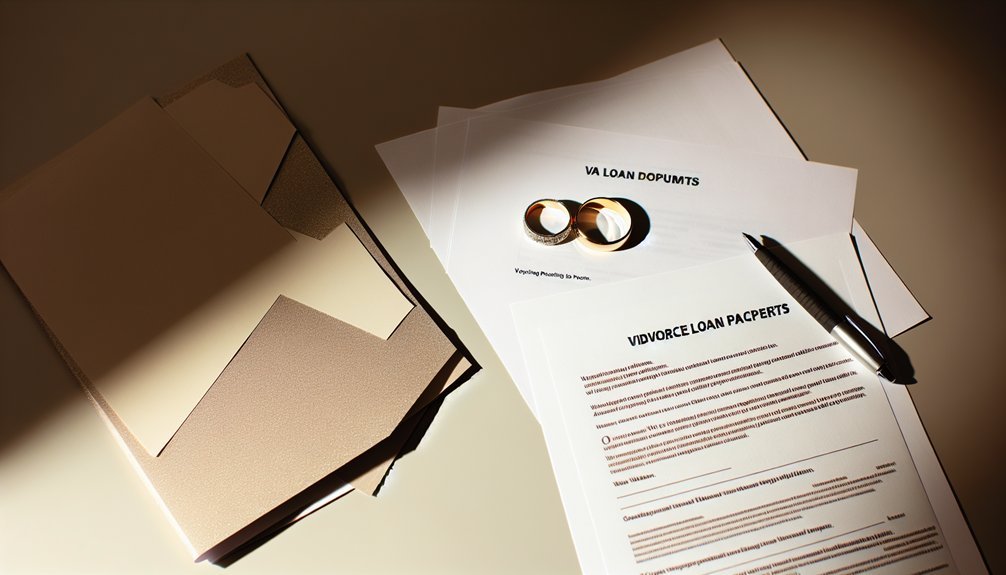
Having your proof of identity sorted is just the first step in the VA loan application process. If you’ve been through a divorce, gathering your divorce documents is essential. These decrees provide evidence of your marital dissolution and clarify your financial obligations, which lenders need to assess your application. Make sure to include any spousal support agreements, as they help lenders understand your ongoing income and expenses. Additionally, disclose any property settlements or transfers mentioned in the divorce decree, as these can impact your financial situation. Organizing all relevant paperwork not only streamlines the approval process but also enhances your credibility with lenders. Incomplete documentation can lead to delays, so be thorough and prepared.
Bankruptcy Documents (if applicable)
If you’ve experienced bankruptcy, it’s important to prepare the necessary documents for your VA loan application. Transparency about your financial history is vital, as lenders need to understand your situation. To streamline the process, gather the following documents:
- Bankruptcy Discharge Document: This proves your bankruptcy is officially closed and shows your commitment to settling debts.
- Bankruptcy Schedules: These outline your debts and assets during the bankruptcy, providing insight into your financial past.
- Letter of Explanation: A detailed letter can clarify the circumstances surrounding your bankruptcy, helping lenders assess your current financial stability.
COE
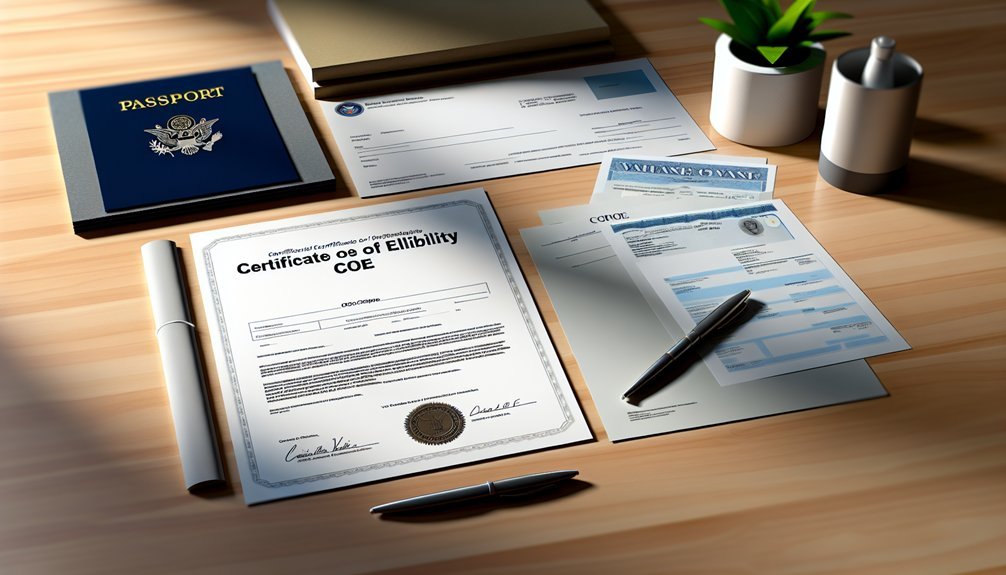
A Certificate of Eligibility (COE) is a key document you’ll need when applying for a VA loan. This crucial paper verifies your eligibility for VA loan benefits based on your military service history. You can obtain your COE through VA-approved lenders, online via eBenefits, or by submitting a paper application using Form 26-1880. It’s usually required before starting the VA loan process to guarantee compliance with lending regulations. If you’re a surviving spouse, you’ll need the deceased Veteran’s DD-214 Form to access these benefits. Active-duty service members can use a Statement of Service instead of a COE, outlining their current duty status. Having your COE ready helps streamline your application process for your new home.
Conclusion
By gathering these essential documents, you’re not just preparing for a VA loan—you’re commencing on a thrilling adventure toward homeownership! Picture yourself soaring through the application process like a superhero armed with your DD-214 and bank statements. You’ll dazzle lenders with your impeccable organization, and before you know it, you’ll be holding the keys to your dream home! So don’t wait—grab that checklist, and let’s turn your homeownership dreams into a reality faster than you can say “VA loan approval!”